
-
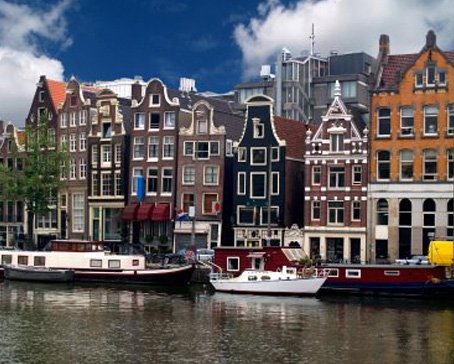
Amsterdam Canals
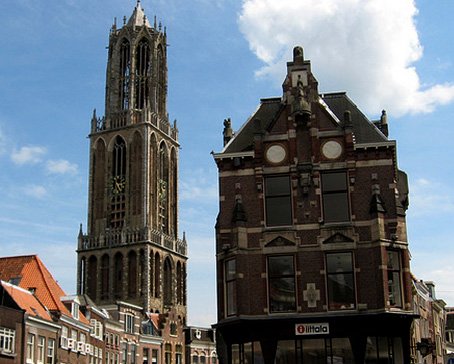
Amsterdam, capital of the Netherlands, has been called the "Venice of the North" for its more than one hundred kilometres of canals, about 90 islands and 1,500 bridges Read More -
Anne Frank House
The Anne Frank House located on the Prinsengracht canal in Amsterdam, the Netherlands, is a museum dedicated to Jewish wartime diarist Anne Frank, who hid from Nazi persecution with her family and four other people in hidden rooms at the rear of the building. Read More -
Deltaworks
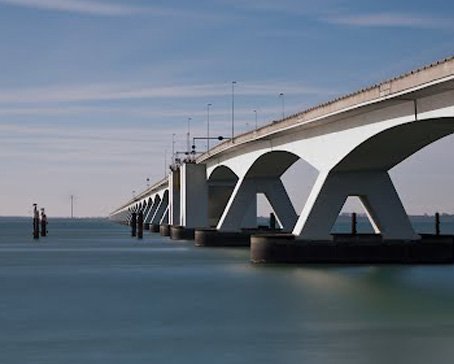
Flood control is an important issue for the Netherlands, as about two thirds of its area is vulnerable to flooding, while the country is among the most densely populated on Earth. Natural sand dunes and man-made dikes, dams and floodgates provide defense against storm surges from the sea. Read More -
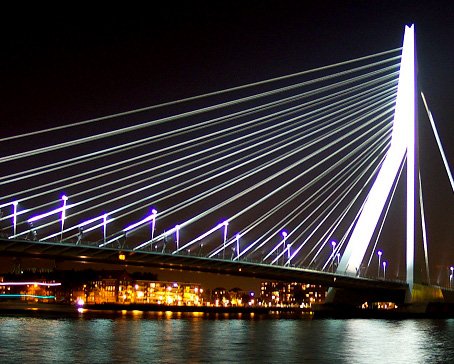
Rotterdam Architecture
Rotterdam is the second-largest city in the Netherlands and one of the largest ports in the world. Rotterdam is also famous for its Kubuswoningen or cube houses built by architect Piet Blom in 1984. In addition to that there are many international well known architects based in Rotterdam like O.M.A (Rem Koolhaas), MVRDV, Neutelings & Riedijk and Erick van Egeraat to name a few. Read More -
Google Maps - Aviation waypoints
A waypoint is a reference point in physical space used for purposes of navigation. Waypoints are sets of coordinates that identify a point in physical space. Coordinates used can vary depending on the application. Read More
-
 Flevoland is a province of the Netherlands. Located in the centre of the country, at the location of the former Zuiderzee, the province was established on January 1, 1986; the twelfth province of the country, with Lelystad as its capital. The province has approximately 394,758 inhabitants (2011) and consists of 6 municipalities.Read More
Flevoland
-
 Gelderland is a province of the Netherlands, located in the central eastern part of the country. Historically, the province (area) dates from states of the Holy Roman Empire and takes its name from the nearby German city of Geldern.Read More
Gelderland
-
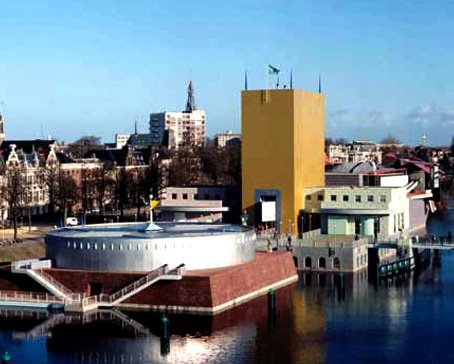 Groningen is the northeasternmost province of the Netherlands. In the east it borders the German state of Niedersachsen (districts of Leer and Emsland), in the south Drenthe, in the west Friesland and in the north the Wadden Sea. The capital of the province is the city of Groningen.Read More
Groningen
-
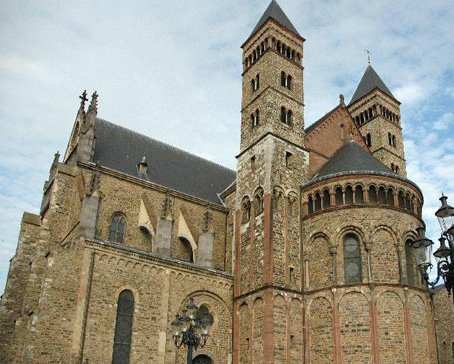 Limburg is the southernmost of the twelve provinces of the Netherlands. It is located in the southeastern part of the country and is bordered by the Dutch provinces of Gelderland to the north and North Brabant to the north and northwest, Germany to the east and Belgium to the south and part of the west. Its capital is Maastricht.Read More
Limburg
-
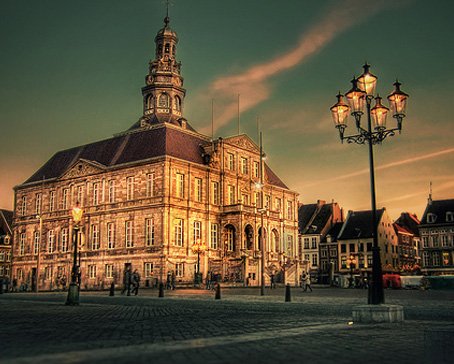 Maastricht is a city in the Netherlands. It is located in the southern part of the Dutch province of Limburg, of which it is the capital.Read More
Maastricht
-
 North Brabant (Dutch: Noord-Brabant is a province of the Netherlands, located in the south of the country, bordered by Belgium's Antwerp and Limburg provinces in the south, the Meuse River (Maas) in the north, and Limburg in the east and Zeeland in the west.Read More
North Brabant
-
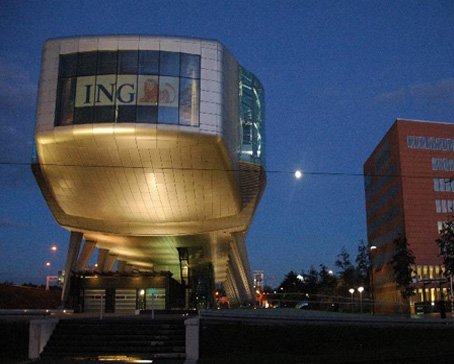 North Holland is a province situated on the North Sea in the northwest of the Netherlands. The provincial capital is Haarlem and its largest city is Amsterdam.Read More
North Holland
-
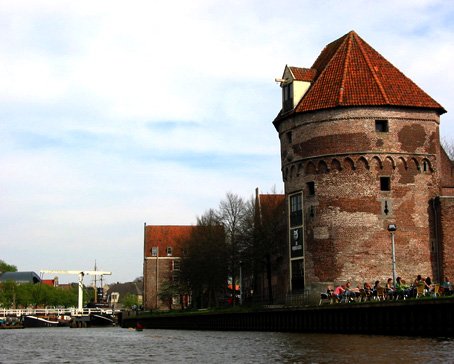 Overijssel is a province[1] of the Netherlands in the central-eastern part of the country. The province's name means "Lands across the river Issel", from the perspective of southern Europe. The capital city of Overijssel is Zwolle and the largest city is Enschede. The province has a population of 1,113,529 inhabitants.Read More
Overijssel
-
 South Holland is a province situated on the North Sea in the western part of the Netherlands. The provincial capital is The Hague and its largest city is Rotterdam.Read More
South Holland
Vermeer - famous Dutch painter from Delft
- Details
- Category: Latest news Visit Holland
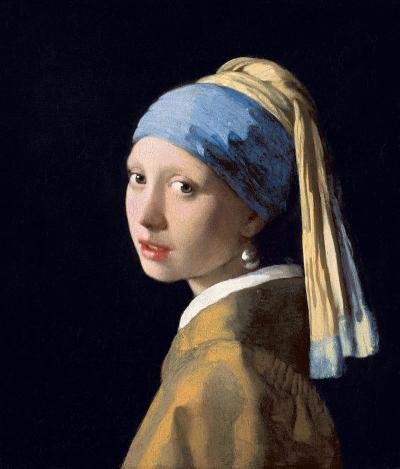
Johannes, Jan or Johan Vermeer (1632 – December 1675) was a Dutch painter who specialized in domestic interior scenes of middle-class life. Vermeer was a moderately successful provincial genre painter in his lifetime. He evidently was not wealthy, leaving his wife and children in debt at his death, perhaps because he produced relatively few paintings.
Vermeer worked slowly and with great care, and frequently used very expensive pigments. He is particularly renowned for his masterly treatment and use of light in his work.Vermeer painted mostly domestic interior scenes. "Almost all his paintings are apparently set in two smallish rooms in his house in Delft; they show the same furniture and decorations in various arrangements and they often portray the same people, mostly women."
He was recognized during his lifetime in Delft and The Hague, but his modest celebrity gave way to obscurity after his death. He was barely mentioned in Arnold Houbraken's major source book on 17th-century Dutch painting (Grand Theatre of Dutch Painters and Women Artists), and was thus omitted from subsequent surveys of Dutch art for nearly two centuries.[7][8] In the 19th century, Vermeer was rediscovered by Gustav Friedrich Waagen and Théophile Thoré-Bürger, who published an essay attributing 66 pictures to him, although only 34 paintings are universally attributed to him today. Since that time, Vermeer's reputation has grown, and he is now acknowledged as one of the greatest painters of the Dutch Golden Age.
Career
It is unclear where and with whom Vermeer apprenticed as a painter. There is some speculation that Carel Fabritius may have been his teacher, based upon a controversial interpretation of a text written in 1668 by printer Arnold Bon. Art historians have found no hard evidence to support this.[Montias 3] Local authority Leonaert Bramer acted as a friend, but their style of painting is rather different.[16] Liedtke suggests that Vermeer taught himself, using information from one of his father's connections.[Liedtke 2] Some scholars think that Vermeer was trained under Catholic painter Abraham Bloemaert. Vermeer's style is similar to that of some of the Utrecht Carravagists, whose works are depicted as paintings-within-paintings in the backgrounds of several of his compositions.
 On 29 December 1653, Vermeer became a member of the Guild of Saint Luke, a trade association for painters. The guild's records make clear that Vermeer did not pay the usual admission fee. It was a year of plague, war, and economic crisis; Vermeer was not alone in experiencing difficult financial circumstances. In 1654, the city suffered the terrible explosion known as the Delft Thunderclap, which destroyed a large section of the city.[17] In 1657, he might have found a patron in local art collector Pieter van Ruijven, who lent him some money. It seems that Vermeer turned for inspiration to the art of the fijnschilders from Leiden. Vermeer was responding to the market of Gerard Dou's paintings, who sold his paintings for exorbitant prices. Dou may have influenced Pieter de Hooch and Gabriel Metsu, too.
The influence of Johannes Vermeer on Metsu is unmistakable: the light from the left, the marble floor. (A. Waiboer, however, suggests that Metsu requires more emotional involvement of the viewer.) Vermeer probably competed also with Nicolaes Maes, who produced genre works in a similar style. In 1662, Vermeer was elected head of the guild and was reelected in 1663, 1670, and 1671, evidence that he (like Bramer) was considered an established craftsman among his peers. Vermeer worked slowly, probably producing three paintings a year on order. Balthasar de Monconys visited him in 1663 to see some of his work, but Vermeer had no paintings to show. The diplomat and the two French clergymen who accompanied him were sent to Hendrick van Buyten, a baker who had a couple of his paintings as collateral.
In 1671, Gerrit van Uylenburgh organised the auction of Gerrit Reynst's collection and offered 13 paintings and some sculptures to Frederick William, Elector of Brandenburg. Frederick accused them of being counterfeits and had sent 12 back on the advice of Hendrick Fromantiou. Van Uylenburg then organized a counter-assessment, asking a total of 35 painters to pronounce on their authenticity, including Jan Lievens, Melchior de Hondecoeter, Gerbrand van den Eeckhout, and Johannes Vermeer.
Style
 Vermeer may have first executed his paintings tonally like most painters of his time, using either monochrome shades of grey ("grisaille") or a limited palette of browns and greys ("dead coloring"), over which he would apply more saturated colors (reds, yellows and blues) in the form of transparent glazes. No drawings have been positively attributed to Vermeer, and his paintings offer few clues to preparatory methods.
There is no other 17th-century artist who employed the exorbitantly expensive pigments lapis lazuli or natural ultramarine either so lavishly or so early in his career. Vermeer not only used this in elements that are naturally of this colour; the earth colours umber and ochre should be understood as warm light within a painting's strongly lit interior, which reflects its multiple colours onto the wall. In this way, he created a world more perfect than any he had witnessed.[Liedtke 3] This working method most probably was inspired by Vermeer’s understanding of Leonardo’s observations that the surface of every object partakes of the colour of the adjacent object. This means that no object is ever seen entirely in its natural colour.
A comparable but even more remarkable, yet effectual, use of natural ultramarine is in The Girl with a Wineglass. The shadows of the red satin dress are underpainted in natural ultramarine,[30] and, owing to this underlying blue paint layer, the red lake and vermilion mixture applied over it acquires a slightly purple, cool and crisp appearance that is most powerful.
Even after Vermeer’s supposed financial breakdown following the so-called rampjaar (year of disaster) in 1672, he continued to employ natural ultramarine generously, such as in Lady Seated at a Virginal. This could suggest that Vermeer was supplied with materials by a collector, and would coincide with John Michael Montias’ theory that Pieter van Ruijven was Vermeer’s patron.
Vermeer's works are largely genre pieces and portraits, with the exception of two cityscapes and two allegories. His subjects offer a cross-section of seventeenth-century Dutch society, ranging from the portrayal of a simple milkmaid at work, to the luxury and splendour of rich notables and merchantmen in their roomy houses. Besides these subjects, religious, poetical, musical, and scientific comments can also be found in his work.
Latest articles
- Accommodatie Eurovisie Songfestival 2020 - Rotterdam
- Vermeer - famous Dutch painter from Delft
- Delft - Oude Kerk - Old Church
- Delft
- Enkhuizen - Havenweg - streetview - Google Maps
- Alkmaar - cheese market - Waagplein - streetview - Google Maps
- Hoorn - city center - Roode Steen - streetview - Google Maps
- Veere - Townhall - streetview - Google Maps
- Middelburg - Townhall - streetview - Google Maps
- Vlissingen - Smallekade - streetview - Google Maps
- Zierikzee- streetview - Google Maps
- Oosterschelde- streetview - Google Maps
- Haringvlietdam - Haringvlietsluis - streetview - Google Maps
- Hollands Diep - streetview - Google Maps
- Moerdijk bridges - streetview - Google Maps
- Harlingen - streetview - Google Maps
- Stavoren - streetview
- Dokkum - streetview
- Giethoorn - streetview
- Claire Morgan The Sound of Silence - Noord Brabants Museum
Visitors for Visitholland
We have 130 guests and no members online