-
Amsterdam Canals
Amsterdam, capital of the Netherlands, has been called the "Venice of the North" for its more than one hundred kilometres of canals, about 90 islands and 1,500 bridges Read More -
Anne Frank House
The Anne Frank House located on the Prinsengracht canal in Amsterdam, the Netherlands, is a museum dedicated to Jewish wartime diarist Anne Frank, who hid from Nazi persecution with her family and four other people in hidden rooms at the rear of the building. Read More -
Deltaworks
Flood control is an important issue for the Netherlands, as about two thirds of its area is vulnerable to flooding, while the country is among the most densely populated on Earth. Natural sand dunes and man-made dikes, dams and floodgates provide defense against storm surges from the sea. Read More -
Rotterdam Architecture
Rotterdam is the second-largest city in the Netherlands and one of the largest ports in the world. Rotterdam is also famous for its Kubuswoningen or cube houses built by architect Piet Blom in 1984. In addition to that there are many international well known architects based in Rotterdam like O.M.A (Rem Koolhaas), MVRDV, Neutelings & Riedijk and Erick van Egeraat to name a few. Read More -
Google Maps - Aviation waypoints
A waypoint is a reference point in physical space used for purposes of navigation. Waypoints are sets of coordinates that identify a point in physical space. Coordinates used can vary depending on the application. Read More
-
 Flevoland is a province of the Netherlands. Located in the centre of the country, at the location of the former Zuiderzee, the province was established on January 1, 1986; the twelfth province of the country, with Lelystad as its capital. The province has approximately 394,758 inhabitants (2011) and consists of 6 municipalities.Read More
Flevoland
-
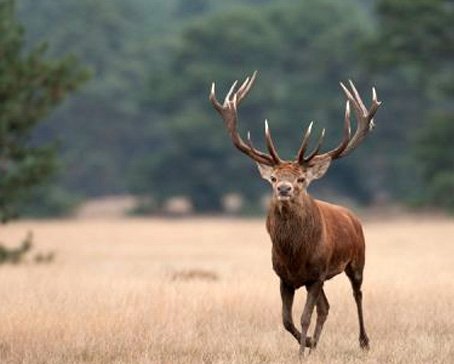 Gelderland is a province of the Netherlands, located in the central eastern part of the country. Historically, the province (area) dates from states of the Holy Roman Empire and takes its name from the nearby German city of Geldern.Read More
Gelderland
-
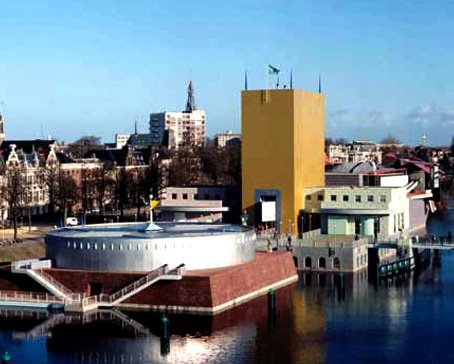 Groningen is the northeasternmost province of the Netherlands. In the east it borders the German state of Niedersachsen (districts of Leer and Emsland), in the south Drenthe, in the west Friesland and in the north the Wadden Sea. The capital of the province is the city of Groningen.Read More
Groningen
-
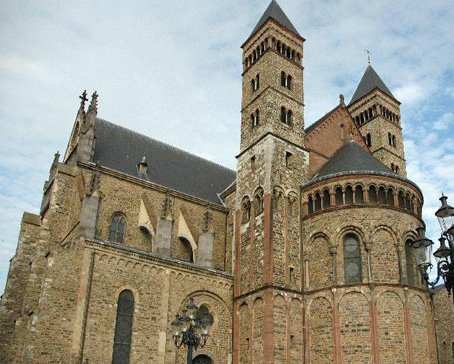 Limburg is the southernmost of the twelve provinces of the Netherlands. It is located in the southeastern part of the country and is bordered by the Dutch provinces of Gelderland to the north and North Brabant to the north and northwest, Germany to the east and Belgium to the south and part of the west. Its capital is Maastricht.Read More
Limburg
-
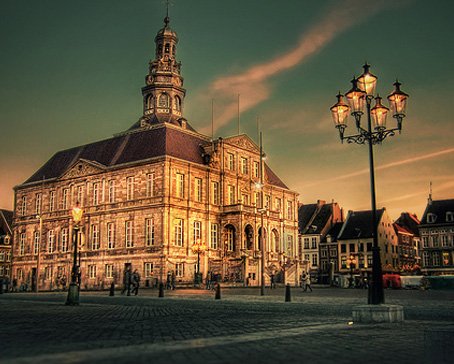 Maastricht is a city in the Netherlands. It is located in the southern part of the Dutch province of Limburg, of which it is the capital.Read More
Maastricht
-
 North Brabant (Dutch: Noord-Brabant is a province of the Netherlands, located in the south of the country, bordered by Belgium's Antwerp and Limburg provinces in the south, the Meuse River (Maas) in the north, and Limburg in the east and Zeeland in the west.Read More
North Brabant
-
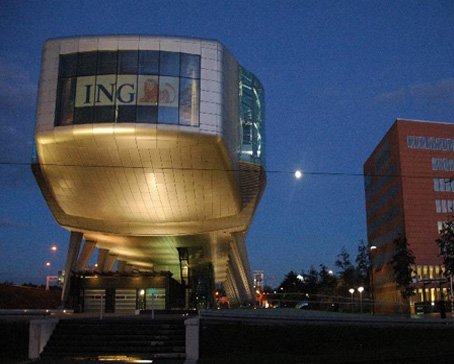 North Holland is a province situated on the North Sea in the northwest of the Netherlands. The provincial capital is Haarlem and its largest city is Amsterdam.Read More
North Holland
-
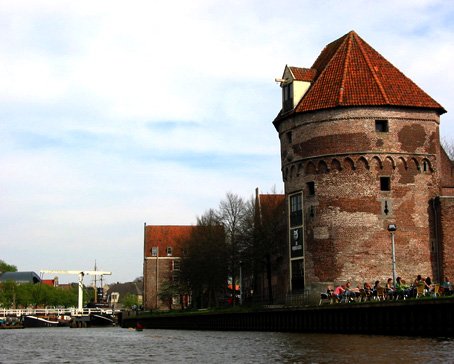 Overijssel is a province[1] of the Netherlands in the central-eastern part of the country. The province's name means "Lands across the river Issel", from the perspective of southern Europe. The capital city of Overijssel is Zwolle and the largest city is Enschede. The province has a population of 1,113,529 inhabitants.Read More
Overijssel
-
 South Holland is a province situated on the North Sea in the western part of the Netherlands. The provincial capital is The Hague and its largest city is Rotterdam.Read More
South Holland

Twente
- Details
- Category: Overijssel - places to visit
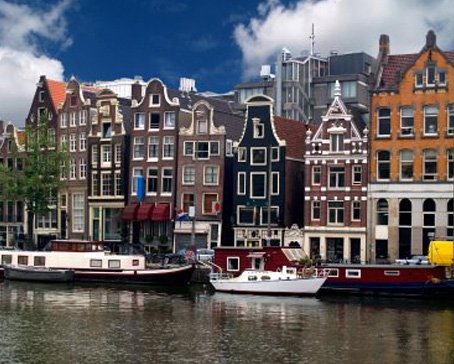
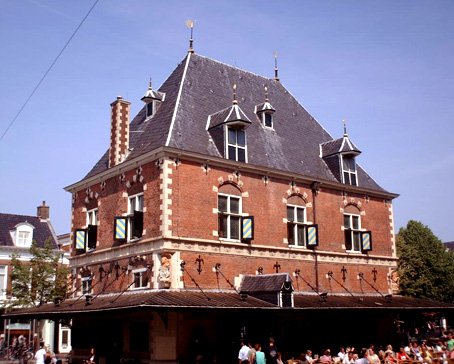
Twente is a non-administrative region in the eastern Netherlands. It encompasses the most urbanised and easternmost part of the province of Overijssel.
 Twente is most likely named after the Tuihanti or Tvihanti, a Germanic tribe that settled in the area and was mentioned by the Roman historian Tacitus.
The region's borders are defined by the Overijssel region of Salland in the northwest and west (the river Regge roughtly defines the western border), the German County of Bentheim in the northeast and east (the river Dinkel roughly defines the eastern border) and the Gelderland region of the Achterhoek in the south.
Twente has approximately 620,000 inhabitants, most of whom live in the three largest cities: Almelo, Hengelo and Enschede, the latter being the main city of the region.
Twente comprises fourteen municipalities: Almelo, Borne, Dinkelland, Enschede, Haaksbergen, Hellendoorn, Hengelo, Hof van Twente, Losser, Oldenzaal, Rijssen-Holten, Tubbergen, Twenterand and Wierden.
The whole of Hellendoorn and the western parts of both Rijssen-Holten and Twenterand historically belong to the cultural region of Salland, but to the city region of Twente.
Etymology
 Various sources provide several explanations of the name Twente. In his work Germania, the Roman historicus Tacitus mentions a tribe called Tvihanti, who lived near or in present-day Twente. This same name was found on two altar stones found in the ruins of Vercovicium, a Roman guard post on Hadrian's Wall near present-day Housesteads in Northern England. The Tvihanti served in a Roman-Frisian cavalry unit that was stationed there.
An other explanation of the origins of the name, is that Twente was part of the Oversticht, a Medieval administrative construction which included the adjacent shires of Twente and Drenthe. Some scholars believe that the names were probably derived from the local equivalents of the count nouns two (twee) and three (dree).
A third explanation is that the word may be derived from the local language's word for a two year old horse, namely a Twenter. Throughout history, horses have always played a significant role in Twents agriculture. Horses are a much cherished symbol for the people from Twente, and in fact for many people who claim to be of Saxon origin. The two legendary figures Hengist and Horsa (both named after horses), who were said to have conquered Great-Britain in the early Middle Ages, are commonly though disputably claimed to be of Twents origin, or from directly surrounding areas. The horse is featured in the Twents flag, and many inhabitants are involved in equestrianism.
Landscape
 Although Twente is the most urbane part of the province of Overijssel, it is renowned for its scenic countryside. This is sometimes typefied as a bocage landscape, attracting many tourists from other parts of the country, with popular sights such as the Lutterzand on the meandering Dinkel, or the wide heather fields on the Frezenbaarg near Markelo. Twente is bisected from north to south by a range of hills in western Twente (Holterberg, Rijsserberg, Friezenberg, Nijverdalse Berg, Hellendoornse Berg), and hills in the east, with the Tankenberg near Oldenzaal being the highest point. The towns of Ootmarsum, and Oldenzaal to a lesser extent, are known for their scenic historical buildings, the latter of which has a noteworthy Roman-style church called 'Oale Grieze' (Old Grey one), which is the oldest Roman-style church in the Netherlands. Eight Twents towns have obtained city rights: Almelo, Delden, Diepenheim, Enschede, Goor, Oldenzaal, Ootmarsum, and Rijssen.
Since Twente's economy is for a considerable part reliant on agriculture, this leaves its marks on the landscape, with lots of meadows and pastures, alternated by, undergrowth, scrubs and copse. There are several fens, marshes and peat bogs, which long made Twente less accessible for the rest of the Netherlands, and which formed some natural defence. It also made the inhabitants of Twente to incline towards the east (Westphalia, and Münster, more precisely) for trade, politics and fashion, rather than to the more western parts of the Netherlands.
Geologically, Twente is one of the most interesting areas of the Netherlands. It has strata (earth layers) from various eras concentrated in a relatively small area. There is an open stone quarry at Losser, while there are several salt mines at Hengelo and Boekelo. The western Twente town of Nijverdal is the only place in the Netherlands where gold was ever found.
Culture and folklore
The flag of Twente is a bright red cloth with a white rampant horse, which is believed to be the Saxon Steed. The rampant horse is not uncommonly found in the coats of arms or banners of other regions with a Saxon heritage, such as the German states of North Rhine-Westphalia and Lower Saxony, and County Kent in England.
Traditions
In the more rural parts of Twente, a notion called Noaberskop, which may be roughly translated as neighbourship, is deemed of great importance. In short, noaberskop involves neighbours looking after each other, or giving good counsel whenever a neighbour asks for advice. For instance, it may include collecting each other's mail and watering plants and flowers while the other family is on holiday and looking after each other's pets. Noaberskop is regarded a matter of rights and obligations. A neighbour may for instance call on the other neighbours for help if something needs to be repaired or otherwise taken care of, but it is very indecent to refuse if the other neighbours then ask a favour in return. Neighbours are expected to help each other preparing wedding celebrations, funerals, birthday parties, etc. Though modern social security service has reduced the need for strong noaberskop bonds, some communities do appreciate newcomers to adapt to these old customs and to "make neighbourship" with the others, and not fulfilling noaberskop duties may be still regarded a grave offence.
A number of traditional cultural practices have been preserved in Twente, such as blowing mid-winter horns around Christmas, and burning Easter fires. Twente is also known for its considerable number of so-called klootsketersverennigings (Road bowling Associations), which is commonly considered the "local traditional sport".
In the small town of Ootmarsum, a tradition known as vlöggeln is practised annually around Easter. Firstly, a group of eight young bachelors called Poaskearls (Easter Men) are selected. On Easter morning, the Poaskearls form a human chain by joining hands. They go through some of the houses of the town while singing psalms, after which the other inhabitants and other spectators may join the chain. After a while, the chain halts in the town centre, where fathers may lift their young children three times, while shouting halleluja. The gathering continues towards the fields, where a large Easter Fire has been built by the community. The gathering sings a psalm and then the Poaskearls light the bonfire. It is commonly believed to be a Roman Catholic adaptation of a pre-Christian fertility tradition.
An extravagant carnival is celebrated in Oldenzaal, which, like the most of eastern Twente has a considerable group of Roman Catholics. The west of Twente is mainly Protestant.
Architecture
 Twente is mainly a rural area with a number of urban centres. The Saxon heritage of Twente is reflected in the design of more traditional farms and residential houses. Twente has the only remaining "Lös Hoes" in the Netherlands (lit. Loose House), a type of construction design that was previously common throughout the east of the Netherlands, and the north of Germany. A lös hoes consisted mostly of one room in which both humans and livestock lived together. The roofs, which are relatively large in comparison to contemporary houses, making up approximately 2/3 of the entire height, were mostly thatched, and supported by a frame of thick beams. The TwentseWelle museum in Enschede has reconstructed a lös hoes on their premises. Many contemporary houses are designed with "Twents" Saxon elements, such as thatched roofs, wooden planks to decorate the gables, and gewelteekns (gable signs), which are wooden planks shaped with several stylised symbols, such as a life tree, cross, anchor and heart, a sun wheel, and two rampant horses. These gewelteekns are mounted vertically onto the ridge of the house at the front and the back gable. The symbols are believed to either invoke prosperity or ward off misfortune.
Many construction companies have their origins, or main office, in Twente. Especially in the town of Rijssen, which houses over twenty more or lesser known construction companies next to companies that provide related services, such as plumbing, building insulation and electricity. This makes Twente an attractive place for architects.
A well-known piece of architecture is found in the town of Goor, where a construction engineering company has built their main office in the style of Friedensreich Hundertwasser, who was known for using lively colours and natural forms
Latest articles
- Accommodatie Eurovisie Songfestival 2020 - Rotterdam
- Vermeer - famous Dutch painter from Delft
- Delft - Oude Kerk - Old Church
- Delft
- Enkhuizen - Havenweg - streetview - Google Maps
- Alkmaar - cheese market - Waagplein - streetview - Google Maps
- Hoorn - city center - Roode Steen - streetview - Google Maps
- Veere - Townhall - streetview - Google Maps
- Middelburg - Townhall - streetview - Google Maps
- Vlissingen - Smallekade - streetview - Google Maps
- Zierikzee- streetview - Google Maps
- Oosterschelde- streetview - Google Maps
- Haringvlietdam - Haringvlietsluis - streetview - Google Maps
- Hollands Diep - streetview - Google Maps
- Moerdijk bridges - streetview - Google Maps
- Harlingen - streetview - Google Maps
- Stavoren - streetview
- Dokkum - streetview
- Giethoorn - streetview
- Claire Morgan The Sound of Silence - Noord Brabants Museum
Visitors for Visitholland
We have 90 guests and no members online